Many ERP projects begin with software selection. We flip that around. The first question is where an organization wants to be in three years, and which current processes are standing in the way of that. Only then do you choose the technology.
“ERP software is a means; business optimization is the goal,” says Peter in the FD. According to him, if you treat an ERP implementation as merely an IT project, you end up with a new system that still carries your old problems—simply repackaged in a more modern guise.
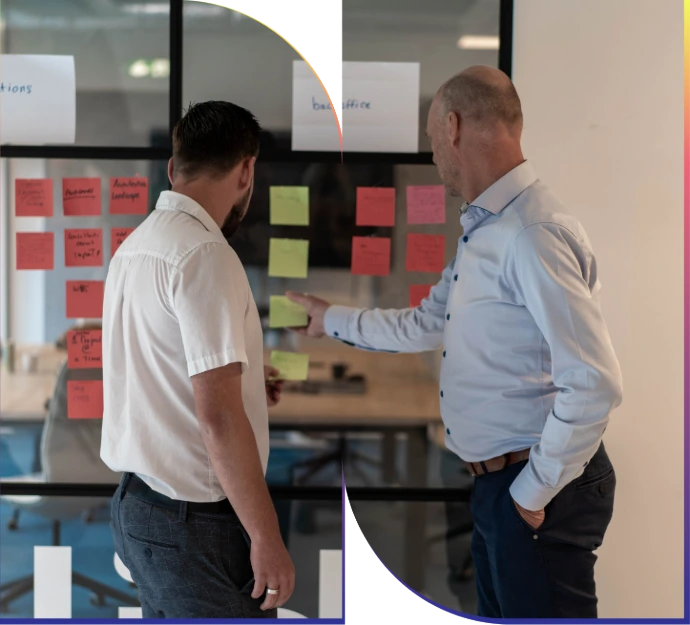
That is why our approach centers on the blueprint. Together with the client, we map out the processes, architecture, and integrations—before a single line is configured.
One version of the truth
In Odoo, sales, accounting, purchasing, logistics, manufacturing, projects, and HR come together on a single platform. This provides a single version of the truth. Sales can immediately see what is in stock, accounting can view the margin on an order as soon as it is recorded, and management can make decisions based on real-time data rather than waiting for the month-end close.
This centralized data also serves as the foundation for AI. With a single query, an account manager can obtain a comprehensive view of a customer—including open orders, deliveries, support tickets, and other relevant information. Data from various departments is not only brought together but also made immediately actionable, enabling smarter management, automation, and forecasting of processes.
Change at a human pace
A new system needs time to settle in. During an initial migration, it is usually wise not to overhaul too many processes at once. Avoiding custom development, cleaning up master data, and transitioning to modern software already yield immediate benefits, without placing an excessive burden on the organization.
At least as important are the people. “The key users know the company; we know Odoo,” says Peter. We don’t believe in consultants who dictate how things should be done from on high. Key users help build the system, and those who help build it also take ownership of the result. This level of involvement is the best guarantee that, once the system goes live, it will actually be used and continue to be developed further.
After the go-live, the real winnings begin.
The go-live is not an end point, but a starting point. The initial years that follow are the prime time to drive real efficiency. Once the system has become well-established, we use AI to analyze where processes are faltering. We then simplify or automate these, step by step, ensuring the organization retains control throughout the process.
The fact that this pays off is demonstrated by a client that switched from SAP to Odoo. In the two years following the go-live, the company further optimized its processes. The number of orders grew by more than 30 percent to approximately 1.3 million per year, while the headcount remained virtually the same. This is what becomes possible when employees embrace the system and management continues to invest in improvement.
Curious about what this means for your organization?
As one of the longest-standing Odoo Gold Partners in the Netherlands, we guide organizations from blueprint to hypercare—and beyond. Are you considering a switch to Odoo, or are you not yet getting the most out of your current ERP? Get in touch with us at cravit.nl. We would be happy to help you think through where your organization wants to be in three years’ time.